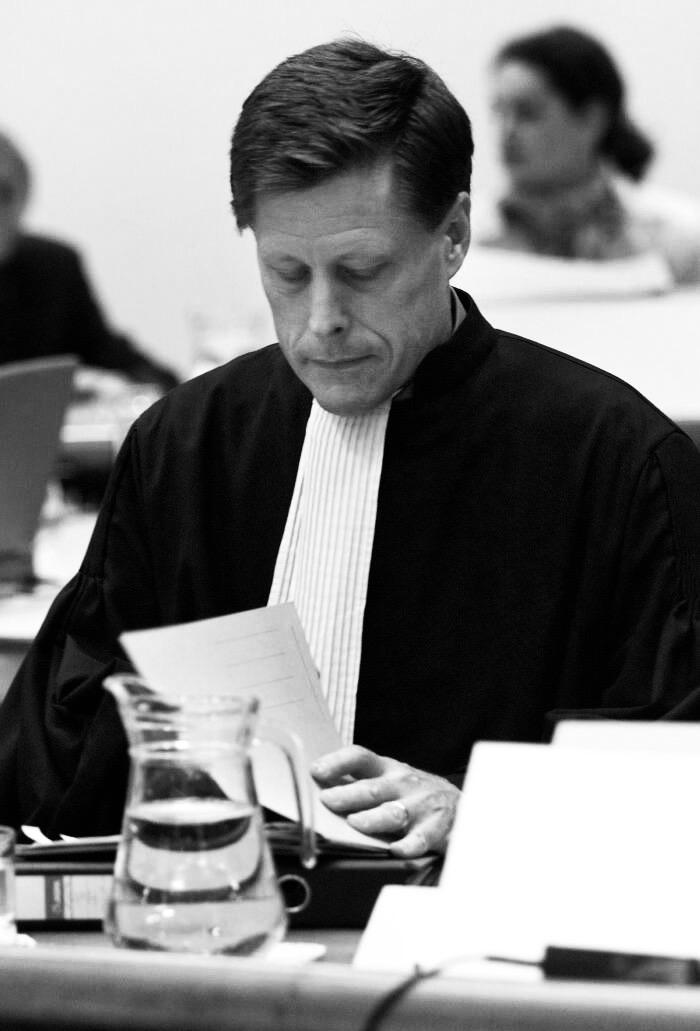
The Mark Harmon Legacy Grant supports a new generation of lawyers in Bosnia and Herzegovina, in memory of a prosecutor who dedicated his work to international justice.
Established with the consent of the Harmon familySupported by his colleagues from The HagueFor the next generation of legal minds in Bosnia
About the fund
From the courtroom. To the next generation.
Justice depends on people willing to pursue it. Through the Mark Harmon Legacy Grant, Asocijacija Bosna is turning remembrance into an opportunity for young people in Bosnia and Herzegovina.
The planned scholarship fund will support the education of future lawyers and related research in international law, human rights, genocide and war crimes, and the culture of remembrance.
The initiative has the consent of Mark Harmon’s family and the support of his colleagues from The Hague. Our purpose is to carry forward the values of knowledge, professional integrity and responsibility towards victims.
17
Years as an ICTY senior trial attorney
2001
First ICTY genocide conviction in the Krstić case
∞
A legacy for future generations
His legacy
Mark Harmon. A life dedicated to justice.
An American lawyer, Harmon served as an ICTY senior trial attorney from 1994 to 2011. Earlier, he prosecuted federal cases at the US Department of Justice. A 1971 UC Hastings law graduate, he later shared his expertise with students, including at Stanford and UNICRI. In 2005, the International Association of Prosecutors recognised his work with a Special Achievement Award.
His contribution is best understood through the work of the prosecution teams he led, the evidence tested in court, and the judicial decisions that followed. The judgments belong to the courts; his legacy lies in helping bring those cases before them.
The Krstić trial results in the ICTY’s first conviction for genocide.
2011
Concludes 17 years of service at the ICTY; records his SENSE oral-history interview.
2012–2015
Serves as an international co-investigating judge at Cambodia’s ECCC.
2024
Dies in September. This grant honours his memory.
Peter McCloskey on Mark Harmon
A personal recollection from a longtime friend and colleague.
ICTY / MKSJ
The cases. The evidence. The judgments.
SENSE identifies Harmon as the leader of prosecution teams in the four trials below. Each entry distinguishes the trial judgment from the outcome on appeal.
IT-98-33 · SREBRENICA
Radislav Krstić
The judgment against Radislav Krstić on 2 August 2001 marked a historic milestone: it was the ICTY’s first conviction for genocide, establishing that genocide had been committed in Srebrenica. Mark Harmon led the prosecution team in this case.
Final sentence: 35 years
Case details and final outcome
On 2 August 2001, the Trial Chamber convicted Krstić of genocide and other crimes and imposed 46 years. On 19 April 2004, the Appeals Chamber upheld the finding of genocide at Srebrenica, but held Krstić responsible for aiding and abetting genocide. His sentence was reduced to 35 years.
A prosecution concerning the responsibility of a senior Bosnian Serb political leader for crimes against civilians.
Final sentence: 20 years
Case details and final outcome
The Trial Chamber imposed 27 years on 27 September 2006, convicting him of crimes against humanity and acquitting him of genocide and complicity in genocide. On 17 March 2009, the Appeals Chamber imposed 20 years for persecution, deportation and forcible transfer.
A case concerning an HVO commander and crimes against Bosnian Muslim civilians in central Bosnia.
Final sentence: 9 years
Case details and final outcome
The Trial Chamber imposed 45 years on 3 March 2000. On 29 July 2004, the Appeals Chamber reversed substantial parts of the judgment and reduced the sentence to nine years. The final convictions concerned inhuman and cruel treatment, including the use of civilians as human shields.
Harmon led the trial prosecution of the former Chief of the General Staff of the Yugoslav Army.
Final outcome: acquittal on appeal
Case details and final outcome
On 6 September 2011, the Trial Chamber imposed a 27-year sentence for crimes in Bosnia and Herzegovina and Croatia. On 28 February 2013, the Appeals Chamber reversed the convictions, acquitted Perišić of all charges and ordered his release.
SENSE also records his leadership of guilty-plea proceedings involving Biljana Plavšić, Miroslav Deronjić, Miroslav Bralo, Dražen Erdemović and Ranko Češić. Their custodial sentences were 11, 10, 20, 5 and 18 years respectively.
A UN record preserves Harmon’s closing statement at the July 1996 Rule 61 hearing concerning Radovan Karadžić and Ratko Mladić. This was an early evidentiary hearing while the accused were at large, distinct from their later trials.
In a 97-minute conversation with Mirko Klarin on 12 July 2011, Harmon discusses building an international prosecution, the practical challenges of investigating war crimes and the limits imposed by state cooperation.
Investing in the people who will carry justice forward.
The fund is being developed to help young people in Bosnia and Herzegovina continue their legal education and contribute to a society grounded in justice.
Legal education
Supporting a new generation of lawyers with the knowledge and integrity to serve their communities.
Research and human rights
Encouraging study of international law, human rights, genocide and war crimes.
A lasting culture of remembrance
Connecting established facts and judicial records with the responsibility to preserve and share them.
CALL FOR APPLICATIONS · TO BE ANNOUNCED
Scholarship applications
The scholarship programme is in preparation. The first call will set out eligibility, the award amount, selection criteria, required documents and the application deadline.
Applications are not yet open.
No application deadline or scholarship amount has been announced on this website. Please return for the official call from Asocijacija Bosna.
Who is the initiative intended to support?
The central aim is to support the next generation of lawyers in Bosnia and Herzegovina. Related research areas include international law, human rights, genocide and war crimes, and remembrance. The official call will define eligibility.
How will donations be used?
The campaign is intended to help establish the scholarship fund, support future scholarship recipients and related research. Award amounts and the detailed allocation of funding will be announced by Asocijacija Bosna.
Can I apply now?
Applications are not open yet. The official call and submission instructions will be published once the programme is ready.
Is this a court programme?
No. This is an initiative of Asocijacija Bosna, established with family consent and supported by Harmon’s former colleagues. References to SENSE and the courts identify historical sources and do not imply institutional sponsorship.
Friends
A shared commitment.
This project brings together remembrance, family consent and the solidarity of colleagues who worked in international justice.
The Harmon family
The initiative is being developed with the permission of Mark Harmon’s family.
His colleagues from The Hague
Colleagues have expressed support for preserving his legacy through educational opportunities.
Asocijacija Bosna
The project initiator and organiser of the Mark Harmon Legacy Grant fundraising campaign.
Contact
Become part of this legacy.
For questions about supporting the fund, partnerships or the planned scholarship programme, contact Asocijacija Bosna through the organiser contact option on the official GoFundMe campaign.
Biographical information: SENSE Transitional Justice Center. Case outcomes: ICTY records. Programme information: Asocijacija Bosna and its official fundraising campaign. Historical summaries distinguish prosecution roles from judicial findings.